CATEGORY: Crawling Robots, Ultimate Destruction, Fun
DIVISION: Modern Evil Products
NOTE: Crawling robots will NOT, repeat, NOT take over the planet. However they may disrupt it from time to time. So join the fun and order your Modern Evil Creepy Robot today. With Five Fantastic models to choose from - Crawling Japanese Businessman, Rolly-Chatty Severed Head, Left Hand, Right Hand, and The Upper Torso Terrorizer - you can unleash laughter while you unleash hell on your friends and family.
Enjoy a demo of the good times to come. Order now!
14.12.08


27.11.08
Fake Penis Felony
CATEGORY: Felony, Fake Penis, Drug Test
DIVISION: Modern Evil Products
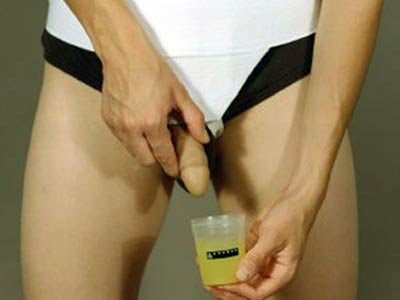
NOTE: Shooting bottles in the woods or target practice on the range is OK, but take your loaded weapon into a bank and wave it around - now, you've got problems. A fake penis works the same way. Waggle it happily at a party or shoot ketchup through it in the privacy of your own home - it's all good. But use it to subvert drug tests and you'll be locked up where the waggle parties are nasty.
H.B. Man Pleads Guilty to Selling Fake Penis to Cheat Drug Tests
Reports: Robert Dennis Catalano helped sell Whizzinator, Yellow River devices, designed to thwart drug tests.
By ANNIE BURRIS
A Huntington Beach man pleaded guilty before a U.S. District Court in Pittsburgh this week to selling products such as the Whizzinator, which has a prosthetic penis to help people cheat workplace drug tests, according to published reports.
Robert Dennis Catalano, 62, of Huntington Beach; George W. Wills, 65, of San Pedro; and their company Puck Technology Inc., in Signal Hill, pleaded guilty Monday to conspiracy to defraud the government and conspiracy to sell drug paraphernalia, according to the Pittsburgh Tribune-Review.
Contraptions called the Whizzinator, Yellow River and Number 1 sold by the company allowed men and women to simulate urination in order to register a false negative during testing, the Review said.
The Whizzinator attracted the attention of Congress in 2005 when a National Football League player tried to cheat a drug test. Then-Minnesota Vikings running back Onterrio Smith was detained at Minneapolis-St. Paul International Airport with the prosthetic and a packet of dehydrated urine. A House subcommittee held a hearing but no action was ever taken, reports said.
Actor Tom Sizemore also was caught with one after he attempted to evade drug tests while on probation, reports said.
Company website pucktechnology.wbx-staging.com, which is still online, said "The Whizzinator is an easy to conceal, easy to use urinating device with a very realistic prosthetic penis. It is designed to be comfortably worn as an undergarment for extended periods of time and has been extensively tested and proven to work under real-life conditions."
The devices were sold from October 2005 through May 2008. If convicted, Catalano and Wills could face up to eight years in prison and a fine of $500,000, reports said.
As part of the investigation, undercover purchases of the products were made on Sept. 8, 2006, and Feb. 7, 2007. The company has stopped operating, according to the paper.
Sentencing is scheduled for Feb. 20 before U.S. District Judge David S. Cercone, reports said.
DIVISION: Modern Evil Products
NOTE: Shooting bottles in the woods or target practice on the range is OK, but take your loaded weapon into a bank and wave it around - now, you've got problems. A fake penis works the same way. Waggle it happily at a party or shoot ketchup through it in the privacy of your own home - it's all good. But use it to subvert drug tests and you'll be locked up where the waggle parties are nasty.

H.B. Man Pleads Guilty to Selling Fake Penis to Cheat Drug Tests
Reports: Robert Dennis Catalano helped sell Whizzinator, Yellow River devices, designed to thwart drug tests.
By ANNIE BURRIS
A Huntington Beach man pleaded guilty before a U.S. District Court in Pittsburgh this week to selling products such as the Whizzinator, which has a prosthetic penis to help people cheat workplace drug tests, according to published reports.
Robert Dennis Catalano, 62, of Huntington Beach; George W. Wills, 65, of San Pedro; and their company Puck Technology Inc., in Signal Hill, pleaded guilty Monday to conspiracy to defraud the government and conspiracy to sell drug paraphernalia, according to the Pittsburgh Tribune-Review.
Contraptions called the Whizzinator, Yellow River and Number 1 sold by the company allowed men and women to simulate urination in order to register a false negative during testing, the Review said.
The Whizzinator attracted the attention of Congress in 2005 when a National Football League player tried to cheat a drug test. Then-Minnesota Vikings running back Onterrio Smith was detained at Minneapolis-St. Paul International Airport with the prosthetic and a packet of dehydrated urine. A House subcommittee held a hearing but no action was ever taken, reports said.
Actor Tom Sizemore also was caught with one after he attempted to evade drug tests while on probation, reports said.
Company website pucktechnology.wbx-staging.com, which is still online, said "The Whizzinator is an easy to conceal, easy to use urinating device with a very realistic prosthetic penis. It is designed to be comfortably worn as an undergarment for extended periods of time and has been extensively tested and proven to work under real-life conditions."
The devices were sold from October 2005 through May 2008. If convicted, Catalano and Wills could face up to eight years in prison and a fine of $500,000, reports said.
As part of the investigation, undercover purchases of the products were made on Sept. 8, 2006, and Feb. 7, 2007. The company has stopped operating, according to the paper.
Sentencing is scheduled for Feb. 20 before U.S. District Judge David S. Cercone, reports said.
12.11.08
My Warhol
CATEGORY: Narcissism, Face, Self-Statues
DIVISION: Modern Evil Products
COMMENT: The repetitive image was the artistic staple that made Warhol,... well, Warhol. The Marilyns, the Elvises - if it was an icon, it got repeated. Now the narcissistic among us can combine Warhol and self-adoration in one wonderful service - ThatsMyFace.com. With a couple of pictures of your head, you can see yourself at 20, 40, 60, or 260! Best of all is their FaceStatue - a photo-realistic 3D statue of your head. And six months from now, every self-obsessed celebrity/artist will fill galleries with signed cranial effigies of every color imaginable at $10K a pop. Damn you and your bejewelled $$$ skull Damien Hirst!

ThatsMyFace offers free online facial analysis as well as FaceStatues, which are glass or plastic statuettes custom-made from your facial profile.
How it Works : Take a frontal and profile photo of your face, upload it to our servers and within a few hours we'll generate your facial profile which includes:
What's a FaceStatue?
Once you've created your own facial profile, we can recreate your face or its caricature as a true-to-life 3D replica. Using patent-pending 3D modeling techniques previously reserved to film studios and professional 3D designers, as well as cutting-edge manufacturing technologies pioneered by the car prototyping industry, ThatsMyFace can bring you life-like FaceStatues of your face to your doorstep.
DIVISION: Modern Evil Products
COMMENT: The repetitive image was the artistic staple that made Warhol,... well, Warhol. The Marilyns, the Elvises - if it was an icon, it got repeated. Now the narcissistic among us can combine Warhol and self-adoration in one wonderful service - ThatsMyFace.com. With a couple of pictures of your head, you can see yourself at 20, 40, 60, or 260! Best of all is their FaceStatue - a photo-realistic 3D statue of your head. And six months from now, every self-obsessed celebrity/artist will fill galleries with signed cranial effigies of every color imaginable at $10K a pop. Damn you and your bejewelled $$$ skull Damien Hirst!

ThatsMyFace offers free online facial analysis as well as FaceStatues, which are glass or plastic statuettes custom-made from your facial profile.
How it Works : Take a frontal and profile photo of your face, upload it to our servers and within a few hours we'll generate your facial profile which includes:
- Your face at 20, 40 and 60 years old
- Your face as an African, Indian, Asian or Caucasian
- Your face as man or woman
- Your caricature
- Identify your facial asymmetries
- Attractiveness rating
- Compare yourself to others and find you look-alikes
- Buy your custom-made FaceStatue!
What's a FaceStatue?
Once you've created your own facial profile, we can recreate your face or its caricature as a true-to-life 3D replica. Using patent-pending 3D modeling techniques previously reserved to film studios and professional 3D designers, as well as cutting-edge manufacturing technologies pioneered by the car prototyping industry, ThatsMyFace can bring you life-like FaceStatues of your face to your doorstep.
11.11.08
Death Diamonds and Necro-Knick-Knacks
CATEGORY: Jewelry, Death, Remembrance
DIVISION: Modern Evil Products
EDITORIAL: What can't you create out of a dead body?! Really, that's the shorter list. So in the spirit of embalming, The Modern Evil Company announces an entire line of lucite-based products: Necro-Knick-Knacks. From paperweights to picture frames, Necro-Knick-Knacks are those indispensable gadgets that are handy for the home or office and do double-duty as death keepsakes. With a lifetime guarantee, you'll never forget where your loved ones are.

What is a LifeGem?
The LifeGem is a certified, high-quality diamond created from the carbon of your loved one as a memorial to their unique life, or as a symbol of your personal and precious bond with another.
LifeGem diamonds are molecularly identical to natural diamonds found at any high-end jeweler. To qualify as diamonds, they must have the exact same brilliance, fire, and hardness (the hardest substance known) as diamonds from the earth, and of course, they do!
LifeGem diamonds are created individually from your specific carbon source in our patented process.
Whether you've lost a loved one or simply want to celebrate your love, the LifeGem diamond provides a way to embrace your loved one’s memory day by day. The LifeGem is the most unique and timeless tribute available for creating a testimony to their unique life.
Your LifeGem memorial will offer comfort and support when and where you need it, and provide a lasting memory that endures just as a diamond does.
DIVISION: Modern Evil Products
EDITORIAL: What can't you create out of a dead body?! Really, that's the shorter list. So in the spirit of embalming, The Modern Evil Company announces an entire line of lucite-based products: Necro-Knick-Knacks. From paperweights to picture frames, Necro-Knick-Knacks are those indispensable gadgets that are handy for the home or office and do double-duty as death keepsakes. With a lifetime guarantee, you'll never forget where your loved ones are.

What is a LifeGem?
The LifeGem is a certified, high-quality diamond created from the carbon of your loved one as a memorial to their unique life, or as a symbol of your personal and precious bond with another.
LifeGem diamonds are molecularly identical to natural diamonds found at any high-end jeweler. To qualify as diamonds, they must have the exact same brilliance, fire, and hardness (the hardest substance known) as diamonds from the earth, and of course, they do!
LifeGem diamonds are created individually from your specific carbon source in our patented process.
Whether you've lost a loved one or simply want to celebrate your love, the LifeGem diamond provides a way to embrace your loved one’s memory day by day. The LifeGem is the most unique and timeless tribute available for creating a testimony to their unique life.
Your LifeGem memorial will offer comfort and support when and where you need it, and provide a lasting memory that endures just as a diamond does.
5.11.08
The Inexactitudes of Stoning
CATEGORY: Sharia Law, Far-Flung-Faith Tours
DIVISION: Modern Evil Products
FOLLOW-UP: What didn't sit right with us the first go-around was the fact that the woman stoned to death "asked to be charged and punished for the crime she committed". Under Sharia or any other law, criminals don't normally turn themselves in. Note then - the story is now corrected, so book your Far-Flung-Faith Tour to marvelous Mogadishu soon!

Stoning Victim 'Begged for Mercy'
A young woman recently stoned to death in Somalia first pleaded for her life, a witness has told the BBC.
"Don't kill me, don't kill me," she said, according to the man who wanted to remain anonymous. A few minutes later, more than 50 men threw stones.
Human rights group Amnesty International says the victim was a 13-year-old girl who had been raped.
Initial reports had said she was a 23-year-old woman who had confessed to adultery before a Sharia court.
Numerous eye-witnesses say she was forced into a hole, buried up to her neck then pelted with stones until she died in front of more than 1,000 people last week.
Meanwhile, Islamists in the capital, Mogadishu have carried out a public flogging.
Mogadishu is nominally under the control of government forces and their Ethiopian allies, who face frequent attacks by Islamist and nationalist insurgents.
The BBC's Mohammed Olad Hassan in the city says the flogging was a show of strength.
He says two men accused of helping to kill a man and torture his mother, who they accused of theft, were each given 39 lashes in the north-eastern suburb of Suqa-hola.
The man who actually killed the alleged thief was released, after agreeing to pay his family 100 camels in compensation.
Before the flogging, hundreds of Islamist fighters performed a military parade, our reporter says.
Death Threats
Cameras were banned from the stoning in Kismayo, but print and radio journalists who were allowed to attend estimated that the woman, Aisha Ibrahim Duhulow, was 23 years old.
However, Amnesty said it had learned she was 13, and that her father had said she was raped by three men.
When the family tried to report the rape, the girl was accused of adultery and detained, Amnesty said.
Convicting a girl of 13 for adultery would be illegal under Islamic law.
A human rights activist in the town told the BBC on condition of anonymity that he had received death threats from the Islamic militia, who accuse him of spreading false information about the incident.
He denies having anything to with Amnesty's report.
Crying
Court authorities have said the woman came to them admitting her guilt.
She was asked several times to review her confession but she stressed that she wanted Sharia law and the deserved punishment to apply, they said.
But a witness who spoke to the BBC's Today programme said she had been crying and had to be forced into a hole before the stoning, reported to have taken place in a football stadium.
"More than 1,000 people arrived there," he said.
"After two hours, the Islamic administration in Kismayo brought the lady to the place and when she came out she said: 'What do you want from me?'"
"They said: 'We will do what Allah has instructed us'. She said: 'I'm not going, I'm not going. Don't kill me, don't kill me.'
"A few minutes later more than 50 men tried to stone her."
Checked by Nurses
The witness said people crowding round to see the execution said it was "awful".
"People were saying this was not good for Sharia law, this was not good for human rights, this was not good for anything."
But no-one tried to stop the Islamist officials, who were armed, the witness said. He said one boy was shot in the confusion.
According to Amnesty International, nurses were sent to check during the stoning whether the victim was still alive. They removed her from the ground and declared that she was, before she was replaced so the stoning could continue.
The port of Kismayo was seized in August by a coalition of forces loyal to rebel leader Hassan Turki, and al-Shabab, the country's main radical Islamist insurgent organisation.
Mr. Turki is on the US list of "financers of terrorism".
It was the first reported execution by stoning in the southern port city since Islamist insurgents captured it.
The BBC had a reporter in the area, but he was shot dead in Kismayo in June.
DIVISION: Modern Evil Products
FOLLOW-UP: What didn't sit right with us the first go-around was the fact that the woman stoned to death "asked to be charged and punished for the crime she committed". Under Sharia or any other law, criminals don't normally turn themselves in. Note then - the story is now corrected, so book your Far-Flung-Faith Tour to marvelous Mogadishu soon!

Stoning Victim 'Begged for Mercy'
A young woman recently stoned to death in Somalia first pleaded for her life, a witness has told the BBC.
"Don't kill me, don't kill me," she said, according to the man who wanted to remain anonymous. A few minutes later, more than 50 men threw stones.
Human rights group Amnesty International says the victim was a 13-year-old girl who had been raped.
Initial reports had said she was a 23-year-old woman who had confessed to adultery before a Sharia court.
Numerous eye-witnesses say she was forced into a hole, buried up to her neck then pelted with stones until she died in front of more than 1,000 people last week.
Meanwhile, Islamists in the capital, Mogadishu have carried out a public flogging.
Mogadishu is nominally under the control of government forces and their Ethiopian allies, who face frequent attacks by Islamist and nationalist insurgents.
The BBC's Mohammed Olad Hassan in the city says the flogging was a show of strength.
He says two men accused of helping to kill a man and torture his mother, who they accused of theft, were each given 39 lashes in the north-eastern suburb of Suqa-hola.
The man who actually killed the alleged thief was released, after agreeing to pay his family 100 camels in compensation.
Before the flogging, hundreds of Islamist fighters performed a military parade, our reporter says.
Death Threats
Cameras were banned from the stoning in Kismayo, but print and radio journalists who were allowed to attend estimated that the woman, Aisha Ibrahim Duhulow, was 23 years old.
However, Amnesty said it had learned she was 13, and that her father had said she was raped by three men.
When the family tried to report the rape, the girl was accused of adultery and detained, Amnesty said.
Convicting a girl of 13 for adultery would be illegal under Islamic law.
A human rights activist in the town told the BBC on condition of anonymity that he had received death threats from the Islamic militia, who accuse him of spreading false information about the incident.
He denies having anything to with Amnesty's report.
Crying
Court authorities have said the woman came to them admitting her guilt.
She was asked several times to review her confession but she stressed that she wanted Sharia law and the deserved punishment to apply, they said.
But a witness who spoke to the BBC's Today programme said she had been crying and had to be forced into a hole before the stoning, reported to have taken place in a football stadium.
"More than 1,000 people arrived there," he said.
"After two hours, the Islamic administration in Kismayo brought the lady to the place and when she came out she said: 'What do you want from me?'"
"They said: 'We will do what Allah has instructed us'. She said: 'I'm not going, I'm not going. Don't kill me, don't kill me.'
"A few minutes later more than 50 men tried to stone her."
Checked by Nurses
The witness said people crowding round to see the execution said it was "awful".
"People were saying this was not good for Sharia law, this was not good for human rights, this was not good for anything."
But no-one tried to stop the Islamist officials, who were armed, the witness said. He said one boy was shot in the confusion.
According to Amnesty International, nurses were sent to check during the stoning whether the victim was still alive. They removed her from the ground and declared that she was, before she was replaced so the stoning could continue.
The port of Kismayo was seized in August by a coalition of forces loyal to rebel leader Hassan Turki, and al-Shabab, the country's main radical Islamist insurgent organisation.
Mr. Turki is on the US list of "financers of terrorism".
It was the first reported execution by stoning in the southern port city since Islamist insurgents captured it.
The BBC had a reporter in the area, but he was shot dead in Kismayo in June.
31.10.08
Far-Flung-Faith Tours
CATEGORY: Extreme Religion, Fundamentalism, Fanatacism
DIVISION: Modern Evil Products
NOTE: Ever wanted to experience the rush of extreme religious fanatacism but didn't know where to begin? Now you can take a taste of the zealous life with the Modern Evil Far-Flung-Faith Tours. How about a Wild Wahabi Weekend, a Rollicking Rapture Retreat, or the stoning-thrill of a Strict Sharia Sabbatical?! The ululating excitement of toe-dipping into a foreign worship without soiling your own beliefs is for everyone. Book Now!
Woman Buried to Neck and Stoned to Death for Adultery
From Correspondents in Mogadishu, Somalia
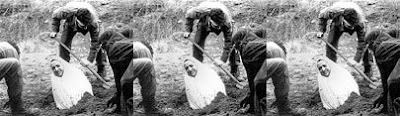
THOUSANDS of people gathered to witness 50 Somali men stone a woman to death after an Islamic court found her guilty of adultery, witnesses say.
Aisho Ibrahim Dhuhulow, who had been found guilty of extra-marital intercourse by a court in the southern port of Kismayo, was buried in the ground up to her neck while the men pelted her head with rocks today, the witnesses said.
"Our sister Aisho asked the Islamic Sharia court in Kismayo to be charged and punished for the crime she committed," local Islamist leader Sheikh Hayakallah told the crowd.
"She admitted in front of the court to engaging in adulterous sexual intercourse," he said.
"She was asked several times to review her confession but she stressed that she wanted Sharia law and the deserved punishment to apply."
The execution was carried out in one of the city's main squares.
The port of Kismayo was seized in August by a coalition of forces loyal to rebel leader Hassan Turki, and the Shebab, the country's main radical Islamist insurgent organisation.
The new administration began implementing a strict form of Sharia (Islamic law).
"This afternoon we are telling the people of Kismayo that we are practising a punishment that is rare in this region and was carried out in Kismayo for the first time," Sheikh Hayakallah said.
Cameras were banned from the public stoning but print and radio journalists were allowed to attend.
DIVISION: Modern Evil Products
NOTE: Ever wanted to experience the rush of extreme religious fanatacism but didn't know where to begin? Now you can take a taste of the zealous life with the Modern Evil Far-Flung-Faith Tours. How about a Wild Wahabi Weekend, a Rollicking Rapture Retreat, or the stoning-thrill of a Strict Sharia Sabbatical?! The ululating excitement of toe-dipping into a foreign worship without soiling your own beliefs is for everyone. Book Now!

Woman Buried to Neck and Stoned to Death for Adultery
From Correspondents in Mogadishu, Somalia
THOUSANDS of people gathered to witness 50 Somali men stone a woman to death after an Islamic court found her guilty of adultery, witnesses say.
Aisho Ibrahim Dhuhulow, who had been found guilty of extra-marital intercourse by a court in the southern port of Kismayo, was buried in the ground up to her neck while the men pelted her head with rocks today, the witnesses said.
"Our sister Aisho asked the Islamic Sharia court in Kismayo to be charged and punished for the crime she committed," local Islamist leader Sheikh Hayakallah told the crowd.
"She admitted in front of the court to engaging in adulterous sexual intercourse," he said.
"She was asked several times to review her confession but she stressed that she wanted Sharia law and the deserved punishment to apply."
The execution was carried out in one of the city's main squares.
The port of Kismayo was seized in August by a coalition of forces loyal to rebel leader Hassan Turki, and the Shebab, the country's main radical Islamist insurgent organisation.
The new administration began implementing a strict form of Sharia (Islamic law).
"This afternoon we are telling the people of Kismayo that we are practising a punishment that is rare in this region and was carried out in Kismayo for the first time," Sheikh Hayakallah said.
Cameras were banned from the public stoning but print and radio journalists were allowed to attend.
29.10.08
Legal Voodoo and Other Mumbo-Jumbo
CATEGORY: Sarkozy, Voodoo Doll
DIVISION: Modern Evil Products
COMMENT: Not that it was ever a problem before, but now even the courts have given voodoo dolls their blessing [and ruling] as being a legitimate expression of satire and religion. So its full steam ahead for the Modern Evil line of custom effigies. Remember to attach at least 2 photographic images of the person, animal or thing you want printed on your "voodoo doll" when you order. And shop early for the holidays.

Sarkozy Loses Fight to Ban Voodoo Doll
by Angelique Chrisafis
A Nicolas Sarkozy voodoo doll which became a bestselling cult classic when the president tried to have it banned, is to remain on sale, after a French court yesterday threw out the ban attempt.
A judge ruled that Nicolas Sarkozy: The Voodoo Manual, which features a doll, a set of pins and a book explaining how to put the evil eye on the president, fell within the boundaries of "free expression" and the "right to humour".
The president's lawyer had argued that, like any French person, Sarkozy owned the right to his image, which was violated by the sale of the doll.
The highly litigious president was ridiculed by his critics for launching the legal action - his sixth lawsuit since his election - and the doll instantly became a sellout.
The Socialist Ségolène Royal, who was the subject of a similar voodoo doll but did not sue, hailed the verdict as a victory for the freedom to "caricature the world's most powerful". Royal, who once filed a legal complaint against someone who hit her with a custard pie, said she did not sue over her doll because she had a sense of humour.
The lawyer for the doll's makers said he was pleased the judge had recognised the existence of a "right to humour".
It is not known whether Sarkozy will appeal.
DIVISION: Modern Evil Products
COMMENT: Not that it was ever a problem before, but now even the courts have given voodoo dolls their blessing [and ruling] as being a legitimate expression of satire and religion. So its full steam ahead for the Modern Evil line of custom effigies. Remember to attach at least 2 photographic images of the person, animal or thing you want printed on your "voodoo doll" when you order. And shop early for the holidays.

Sarkozy Loses Fight to Ban Voodoo Doll
by Angelique Chrisafis
A Nicolas Sarkozy voodoo doll which became a bestselling cult classic when the president tried to have it banned, is to remain on sale, after a French court yesterday threw out the ban attempt.
A judge ruled that Nicolas Sarkozy: The Voodoo Manual, which features a doll, a set of pins and a book explaining how to put the evil eye on the president, fell within the boundaries of "free expression" and the "right to humour".
The president's lawyer had argued that, like any French person, Sarkozy owned the right to his image, which was violated by the sale of the doll.
The highly litigious president was ridiculed by his critics for launching the legal action - his sixth lawsuit since his election - and the doll instantly became a sellout.
The Socialist Ségolène Royal, who was the subject of a similar voodoo doll but did not sue, hailed the verdict as a victory for the freedom to "caricature the world's most powerful". Royal, who once filed a legal complaint against someone who hit her with a custard pie, said she did not sue over her doll because she had a sense of humour.
The lawyer for the doll's makers said he was pleased the judge had recognised the existence of a "right to humour".
It is not known whether Sarkozy will appeal.
28.10.08
DIEt! DIEt! DIEt!
CATEGORY: Flat Belly Diet, Self Image, Perfection
DIVISION: Modern Evil Products
EDITORIAL: The truly wonderful evil of any modern society is "the diet". The schizophrenia of gorging and purging whipsaws the rat-running populace into a never-ending frenzy of personal perfection. And we applaud it.
Coming Soon: Eat Younger - The Fountain of Youth Diet and BBQ + Beer Battles Baldness.

The Flat Belly Diet
Prevention magazine is the country's most authoritative, trustworthy, and innovative source for practical health, nutrition, and fitness information. Now, its editors bring you a weight-loss plan that's specifically designed to target your number-one trouble spot: BELLY FAT.
For women over 40, belly fat is incredibly stealth and incredibly stubborn. It's also the most deadly, contributing to a higher risk of heart disease, diabetes, and chronic illness than any other type of fat on your body. Finally, science has helped uncover a key dietary weapon in the fight against belly fat. Monounsaturated fatty acids, or MUFAs, help dieters lose more weight--in their bellies specifically--and keep it off longer.
Flat Belly Diet! will lead you step by step, day by day, meal by meal toward a flatter belly...and a longer, healthier life.
DIVISION: Modern Evil Products
EDITORIAL: The truly wonderful evil of any modern society is "the diet". The schizophrenia of gorging and purging whipsaws the rat-running populace into a never-ending frenzy of personal perfection. And we applaud it.
Coming Soon: Eat Younger - The Fountain of Youth Diet and BBQ + Beer Battles Baldness.

The Flat Belly Diet
Prevention magazine is the country's most authoritative, trustworthy, and innovative source for practical health, nutrition, and fitness information. Now, its editors bring you a weight-loss plan that's specifically designed to target your number-one trouble spot: BELLY FAT.
For women over 40, belly fat is incredibly stealth and incredibly stubborn. It's also the most deadly, contributing to a higher risk of heart disease, diabetes, and chronic illness than any other type of fat on your body. Finally, science has helped uncover a key dietary weapon in the fight against belly fat. Monounsaturated fatty acids, or MUFAs, help dieters lose more weight--in their bellies specifically--and keep it off longer.
Flat Belly Diet! will lead you step by step, day by day, meal by meal toward a flatter belly...and a longer, healthier life.
25.10.08
Artists and Their Skulls - A Love Affair
CATEGORY: Skulls, Art
DIVISION: Modern Evil Products
NOTE: The second everyone signs the deal, the Modern Evil Company will be offering for sale authentic, limited-edition replicas of the Art Skulls created by Steven Gregory and Damien Hirst. These one-of-a-kind collectibles will dramatically increase in value over their lifetime. They also make memorable gifts.
No Bones About It, These Skulls Are Different
by Charlotte Higgins
To those without finely tuned aesthetic judgment, the similarities between the works seem obvious; but to the artists such comparisons are lacking in imagination.
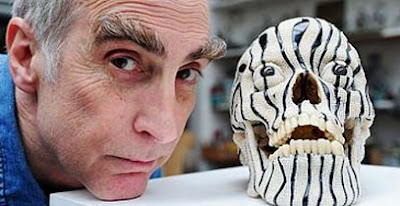
"My skulls and his are very different objects," says Steven Gregory, who has until now kept silent on the apparent congruities between the malachite, pearl or lapis lazuli skulls he has been making since 2001 and Damien Hirst's dazzling sculpture, For the Love of God, produced last year. "What Damien has done is to cast a skull in platinum and encrust it with diamonds. What I do is completely different: I follow the surface of the skull exactly, usually covering it with semi-precious stones."
Yet Hirst and Gregory seem be treading surprisingly similar paths. "About two weeks before there was a piece in the press saying that Damien was doing his skull, I was talking to De Beers [the diamond dealers] about the possibility of my using uncut diamonds on a skull," says Gregory. "It never went anywhere. They weren't interested."
He says the works tell completely different stories. "I put eyes in mine - so the skulls look back; you interact with them. Damien's is very different: with the diamonds there is so much glare coming off, it's as if you can't quite get your eyes to focus on the surface."
And there's undeniably a difference in the price tag. Hirst's skull piece was reportedly sold for £50m. A Gregory skull will cost you £25,000.
Hirst, who declined to comment for this article, is a fan and supporter of Gregory's work. In 2002 he bought some of the first embellished skulls that Gregory made and showed them in the Serpentine Gallery exhibition of his personal art collection in 2006. Hirst also contributed a foreword, and an interview with Gregory, for an exhibition catalogue in 2005.
They share a no-nonsense approach to the use of human remains as materials for their art (Gregory sources his bones from a dealer in scientific antiques, using skeletons once used as teaching aids for medical students).
In his interview with Gregory, Hirst said: "I think if people are being stupid enough to leave their skulls lying around where they can be picked up and start changing hands then it's, you know, it's their own fault, what do they expect? Anything goes." And Gregory said: "I think the taboos to do with bones and skeletons are learned in adulthood, as I've had kids in my studio spending hours playing with [...] beaded bones."
Hirst gave him an early look at For the Love of God ("I really wanted to pick it up and feel it, but Damien said it was a bit awkward because of the security.")
Does Gregory believe Hirst owes him a debt of inspiration? He indicates a postcard in his London studio of 7,000-year-old decorated skulls. "What I am doing is no different from what has been done in the past and what will no doubt be done in the future," he says.
An exhibition by Gregory includes nine skulls, a bronze love seat cast from human bones and a sculpture of an orchid made from beaded bone. He might move away from skulls, he says. "I don't want to be the guy who does the skulls. It seems there's a big fashion for them at the moment."
DIVISION: Modern Evil Products
NOTE: The second everyone signs the deal, the Modern Evil Company will be offering for sale authentic, limited-edition replicas of the Art Skulls created by Steven Gregory and Damien Hirst. These one-of-a-kind collectibles will dramatically increase in value over their lifetime. They also make memorable gifts.

No Bones About It, These Skulls Are Different
by Charlotte Higgins
To those without finely tuned aesthetic judgment, the similarities between the works seem obvious; but to the artists such comparisons are lacking in imagination.
"My skulls and his are very different objects," says Steven Gregory, who has until now kept silent on the apparent congruities between the malachite, pearl or lapis lazuli skulls he has been making since 2001 and Damien Hirst's dazzling sculpture, For the Love of God, produced last year. "What Damien has done is to cast a skull in platinum and encrust it with diamonds. What I do is completely different: I follow the surface of the skull exactly, usually covering it with semi-precious stones."
Yet Hirst and Gregory seem be treading surprisingly similar paths. "About two weeks before there was a piece in the press saying that Damien was doing his skull, I was talking to De Beers [the diamond dealers] about the possibility of my using uncut diamonds on a skull," says Gregory. "It never went anywhere. They weren't interested."
He says the works tell completely different stories. "I put eyes in mine - so the skulls look back; you interact with them. Damien's is very different: with the diamonds there is so much glare coming off, it's as if you can't quite get your eyes to focus on the surface."
And there's undeniably a difference in the price tag. Hirst's skull piece was reportedly sold for £50m. A Gregory skull will cost you £25,000.
Hirst, who declined to comment for this article, is a fan and supporter of Gregory's work. In 2002 he bought some of the first embellished skulls that Gregory made and showed them in the Serpentine Gallery exhibition of his personal art collection in 2006. Hirst also contributed a foreword, and an interview with Gregory, for an exhibition catalogue in 2005.
They share a no-nonsense approach to the use of human remains as materials for their art (Gregory sources his bones from a dealer in scientific antiques, using skeletons once used as teaching aids for medical students).
In his interview with Gregory, Hirst said: "I think if people are being stupid enough to leave their skulls lying around where they can be picked up and start changing hands then it's, you know, it's their own fault, what do they expect? Anything goes." And Gregory said: "I think the taboos to do with bones and skeletons are learned in adulthood, as I've had kids in my studio spending hours playing with [...] beaded bones."
Hirst gave him an early look at For the Love of God ("I really wanted to pick it up and feel it, but Damien said it was a bit awkward because of the security.")
Does Gregory believe Hirst owes him a debt of inspiration? He indicates a postcard in his London studio of 7,000-year-old decorated skulls. "What I am doing is no different from what has been done in the past and what will no doubt be done in the future," he says.
An exhibition by Gregory includes nine skulls, a bronze love seat cast from human bones and a sculpture of an orchid made from beaded bone. He might move away from skulls, he says. "I don't want to be the guy who does the skulls. It seems there's a big fashion for them at the moment."
20.5.08
Going Out In Style
CATEGORY: Coffins, Death, Burial
DIVISION: Modern Evil Products
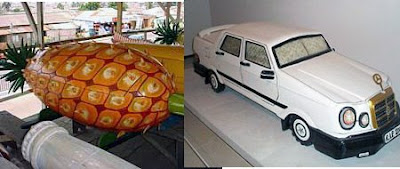
NOTE: You can't choose when you go, but you can certainly choose your style. Cliche'd coffins just won't do. Africans are customizing their final resting places - Why not you?!
Coming Soon - The Custom Coffin Service from Modern Evil.

Coffins From Ghana
For the Ga tribe in coastal Ghana, funerals are a time of mourning, but also of celebration. The Ga people believe that when their loved ones die, they move on into another life -- and the Ga make sure they do so in style. They honor their dead with brightly colored coffins that celebrate the way they lived.
The coffins are designed to represent an aspect of the dead person's life -- such as a car if they were a driver, a fish if their livelihood was the sea -- or a sewing machine for a seamstress. They might also symbolize a vice -- such as a bottle of beer or a cigarette.
Ablade Glover, an artist who works with the carpenters, says the coffin acts as a home in the afterlife, so it must be beautiful. But he laments that after putting so much time into creating the coffin, it gets hidden underground.
"By the end of the day, they are going to bury this thing, which has taken so much time, so much energy?" he says.
DIVISION: Modern Evil Products
NOTE: You can't choose when you go, but you can certainly choose your style. Cliche'd coffins just won't do. Africans are customizing their final resting places - Why not you?!
Coming Soon - The Custom Coffin Service from Modern Evil.

Coffins From Ghana
For the Ga tribe in coastal Ghana, funerals are a time of mourning, but also of celebration. The Ga people believe that when their loved ones die, they move on into another life -- and the Ga make sure they do so in style. They honor their dead with brightly colored coffins that celebrate the way they lived.
The coffins are designed to represent an aspect of the dead person's life -- such as a car if they were a driver, a fish if their livelihood was the sea -- or a sewing machine for a seamstress. They might also symbolize a vice -- such as a bottle of beer or a cigarette.
Ablade Glover, an artist who works with the carpenters, says the coffin acts as a home in the afterlife, so it must be beautiful. But he laments that after putting so much time into creating the coffin, it gets hidden underground.
"By the end of the day, they are going to bury this thing, which has taken so much time, so much energy?" he says.

24.3.08
Killer Robot Plans, DIY and You
CATEGORY: Killer Robots, Suicide, DIY
DIVISION: Modern Evil Products, R&D
NOTE: Killer Robots are the backbone of every nefarious scheme - from world domination all the way down to driveway suicide. But giving away the blueprints to the DIY crowd is like showing your hand before the flop. So while we meet with our internal Products Division, we'd like to remind you that our fantastic line of Killer Robots are all ICC-Approved and finance-ready for overnight shipping within the continental U.S.

Man, 81, Kills Himself with Shot from 'Suicide Robot'
Fran Yeoman
An elderly man has killed himself by programming a robot to shoot him in the head after building the machine from plans downloaded from the internet.
Francis Tovey, 81, who lived alone in Burleigh Heads on the Australian Gold Coast, was found dead in his driveway.
According to the Gold Coast Bulletin, he had been unhappy about the demands of relatives living elsewhere in Australia that he should move out of his home and into care.
Notes left by Mr Tovey — who was born in England — revealed that he had scoured the internet for plans before constructing his complex machine, which involved a jigsaw power tool and was connected to a .22 semi-automatic pistol loaded with four bullets. It could fire multiple shots once triggered remotely.
At 7am on Tuesday he set the robot up in the driveway of his £450,000 house and activated it.
His notes suggested that Mr Tovey chose to kill himself in the driveway because he knew there were workmen building a new house next door who would find his body.
The scheme worked, as carpenter Daniel Skewes heard gunshots and ran to Mr Tovey's home. "I thought I heard three shots and when we ran next door he was lying on the driveway with gunshot wounds to the head," Mr Skewes told the GCB.
A neighbour, who did not want to be named, told the newspaper that Mr Tovey had lived at his home on Gabrielle Grove since 1984. "He was a really marvellous man, an ideal neighbour and I will miss him greatly," she said.
"He was born in England, like I was, and we used to enjoy our tea together. He had visitors from England and family interstate from somewhere far away in Australia.
"There was no inkling of anything amiss, it is just very sad."
DIVISION: Modern Evil Products, R&D
NOTE: Killer Robots are the backbone of every nefarious scheme - from world domination all the way down to driveway suicide. But giving away the blueprints to the DIY crowd is like showing your hand before the flop. So while we meet with our internal Products Division, we'd like to remind you that our fantastic line of Killer Robots are all ICC-Approved and finance-ready for overnight shipping within the continental U.S.

Man, 81, Kills Himself with Shot from 'Suicide Robot'
Fran Yeoman
An elderly man has killed himself by programming a robot to shoot him in the head after building the machine from plans downloaded from the internet.
Francis Tovey, 81, who lived alone in Burleigh Heads on the Australian Gold Coast, was found dead in his driveway.
According to the Gold Coast Bulletin, he had been unhappy about the demands of relatives living elsewhere in Australia that he should move out of his home and into care.
Notes left by Mr Tovey — who was born in England — revealed that he had scoured the internet for plans before constructing his complex machine, which involved a jigsaw power tool and was connected to a .22 semi-automatic pistol loaded with four bullets. It could fire multiple shots once triggered remotely.
At 7am on Tuesday he set the robot up in the driveway of his £450,000 house and activated it.
His notes suggested that Mr Tovey chose to kill himself in the driveway because he knew there were workmen building a new house next door who would find his body.
The scheme worked, as carpenter Daniel Skewes heard gunshots and ran to Mr Tovey's home. "I thought I heard three shots and when we ran next door he was lying on the driveway with gunshot wounds to the head," Mr Skewes told the GCB.
A neighbour, who did not want to be named, told the newspaper that Mr Tovey had lived at his home on Gabrielle Grove since 1984. "He was a really marvellous man, an ideal neighbour and I will miss him greatly," she said.
"He was born in England, like I was, and we used to enjoy our tea together. He had visitors from England and family interstate from somewhere far away in Australia.
"There was no inkling of anything amiss, it is just very sad."
3.12.07
Skulls are Valued at an All-Time High
CATEGORY: Bones, Skeleton Supply
DIVISION: Products
COMMENTARY: As we've been explaining to customers for months now, the bone trade is a tricky business. Our skull supply has been spotty at best - and for this we apologize.
The following article captures the difficulties we face - we encourage our customers to give it a read and be patient with us. Thank you for your understanding.

Inside India's Underground Trade in Human Remains
DIVISION: Products
COMMENTARY: As we've been explaining to customers for months now, the bone trade is a tricky business. Our skull supply has been spotty at best - and for this we apologize.
The following article captures the difficulties we face - we encourage our customers to give it a read and be patient with us. Thank you for your understanding.

Inside India's Underground Trade in Human Remains
Before the authorities intercepted it, this cache was moving along a well-established pipeline for human skeletal remains. For 150 years, India's bone trade has followed a route from remote Indian villages to the world's most distinguished medical schools.
Skeletons aren't easy to get. In the US, for instance, most corpses receive a prompt burial, and bodies donated to science usually end up on the dissection table, their bones sawed to pieces and destined for cremation. So most skeletons used for medical study come from overseas. Often they arrive without the informed consent of their former owners and in violation of the laws of their country of origin.
U.S. institutions pay a hefty price for human bones.
India has long been the world's primary source of bones used in medical study, renowned for producing specimens scrubbed to a pristine white patina and fitted with high-quality connecting hardware. In 1985, however, the Indian government outlawed the export of human remains, and the global supply of skeletons collapsed. Western countries turned to China and Eastern Europe, but those regions produce relatively few skeletons. They have little experience producing display-quality specimens, and their products are regarded as inferior.
Now, 22 years after India's export ban, there are signs that the trade never ended. Black-market vendors in West Bengal continue to supply human skeletons and skulls using the time-honored method: Rob graves, separate soft flesh from unyielding calcium, and deliver the bones to distributors — who assemble them and ship them to dealers around the globe.
Exports to North America are still small compared with pre-ban levels, but shipments are finding their way to American medical programs. Suppliers have ample incentive — it's a lucrative business. The skulls on the ground before me, for instance, would fetch an estimated $70,000 overseas.
The constable grabs the cloth by its corners and gathers the evidence into a bundle. "You know, I've never seen anything like this," he says. "I hope I don't again."
A massive low-pressure system over the Bay of Bengal is threatening to flood the state of West Bengal. Newspapers have already dubbed the storm a "watery apocalypse" after eight people drowned in floods before it even touched land. I'm driving to the tiny village of Purbasthali — about 80 miles outside of Kolkata, the state capital — the site of the processing plant where the police discovered their load of skulls. My rented Toyota Qualis gets stuck in the mud half a mile from the facility, so I jump out to make my way on foot. The sky is pitch-black, the rain suffocating. Toads the size of boxing gloves hop across the muddy track.
When police arrived to investigate last spring, they could smell the stench of rotting flesh from nearly a mile away. Sections of spine strung together with twine dangled from the rafters, an officer told me. Hundreds of bones were scattered on the floor in some sort of ordering system.
This bone factory had been operating for more than 100 years when two of its workers, drinking at a bar, bragged that they were hired to dig bodies out of graves. Shocked villagers dragged them to a police station, where they confessed. The workers said a man named Mukti Biswas ran the factory. The authorities knew him well. In 2006, police had arrested Biswas as the kingpin of a grave-robbing ring; he was released a day later, news reports said, "because of his political links." The police took him into custody once again, but he was let out on bail and has since taken flight.
After 10 minutes of slogging through the mud, I make out the flicker of a gas lamp. I peek into the doorway of a wood-frame house. A family of four sitting on the dirt floor stares back at me.
"Do you know Mukti Biswas?" I ask.
"The bastard still owes me money," replies Manoj Pal, a twentysomething man with a thin mustache. His family has been working at the bone factory for generations, he says. He offers to show me around, and we head out along the bank of the Bhagirathi River.
The processing plant is little more than a bamboo hut with a tarpaulin roof — one of a dozen bone factories Pal says he knows about. In April, the authorities confiscated piles of bones, buckets of hydrochloric acid, and two barrels full of a caustic chemical they have yet to identify. All that's left is a dirt floor with a large concrete vat sunk into the ground.
A third-generation bone trader, Biswas had no problem finding dead bodies. As caretaker of the village's cremation ground, he claimed to have a license to dispose of the dead. But police told reporters he was robbing graves. Biswas pilfered corpses from cemeteries, morgues, and funeral pyres; he would drag the deceased from the flames as soon as the families left. He employed almost a dozen people to shepherd the bones through the various stages of de-fleshing and curing. For this work, Pal says he earned $1.25 a day. He also received a bonus for keeping the bones from a given body together so they represented a biological individual rather than a mishmash of parts — a feature prized by doctors.
Pal explains the factory's production process. First the corpses were wrapped in netting and anchored in the river, where bacteria and fish reduced a body to a loose pile of bones and mush in a week or so. The crew then scrubbed the bones and boiled them in a cauldron of water and caustic soda to dissolve any remaining flesh. That left the calcium surfaces with a yellow tint. To bring them up to medical white, bones were then left in sunlight for a week before being soaked in hydrochloric acid.
Biswas sold complete skeletons wholesale for $45 to a medical supply company called Young Brothers, which wired the pieces together, painted on medical diagrams, and sawed away sections of the skulls to reveal internal structures. Then Young Brothers sold the bones to dealers around the world.
Shining my flashlight on the floor, I pick up a wet rag. The translator lets out a low hiss. "I hope you know that's a death shroud," he says. I drop the cloth and wipe my hand on my shirt.
The empirical study of human anatomy took off with Leonardo da Vinci's sketches in the 15th century; the earliest extant articulated skeleton dates from 1543. As medicine advanced, physicians were expected to have a systematic understanding of the human body's inner workings. By the beginning of the 19th century, Europe's demand for human remains far outstripped supply.
In England, home of many of the world's preeminent medical institutions, grave robbing became so commonplace that certain cemeteries were famous for battles between grieving families and marauding medical students. To contain the problem, the government passed the Anatomy Act of 1832, allowing doctors to take any corpse that was left unclaimed in a city morgue or hospital. The law put an end to grave robbery, but the supply of legal skeletons still couldn't keep up with demand. So British doctors looked to the colonies. In India, members of the dom caste, who traditionally performed cremations, were pressed into service processing bones. In the 1850s, Calcutta Medical College processed 900 skeletons a year, mostly for shipment abroad. A century later, a newly independent India dominated the world market for human bones.
In 1985, the Chicago Tribune reported that India had exported about 60,000 skulls and skeletons the year before. The supply was sufficient for every medical student in the developed world to buy a bone box along with their textbooks. Price: $300.
If most of the merchandise was stolen, at least exporting it was legal. "For years, we ran everything aboveboard," Bimalendu Bhattacharjee, a former president of the Indian Association of Exporters of Anatomical Specimens, told the Los Angeles Times in 1991. "No one advertised, but everyone knew it was going on." At their height, Kolkata's bone factories took in an estimated $1 million a year.
But it couldn't last. The graveyards of West Bengal were being picked clean, and the lure of ready money soon attracted criminal elements.
The industry shuddered to a halt in March 1985, when a bone trader was arrested after exporting 1,500 child skeletons. Because they're relatively rare and illustrate transitional stages in osteological development, child skeletons command higher prices. Indian newspapers claimed that children were being kidnapped and killed for their bones.
Panic spread with news of the arrest. In the months after the indictment, vigilantes combed the cities searching for members of the alleged kidnappers' network. In September, an Australian tourist was killed and a Japanese tourist was beaten by a mob after rumors spread that they were involved in the conspiracy. The attacks might have been enough to stall India's bone industry, but the government had already taken action: A few weeks earlier, India's Supreme Court interpreted the national Import/Export Control Act to prohibit the export of human tissue.
In the absence of competing suppliers in other countries, the court's decision effectively shut down international trade in human skeletons. Medical schools in the US and Europe begged the Indian government to reverse the export ban, to no avail.
Since then, natural human bone has been difficult to come by. The voracious demand for fresh cadavers in medical education consumes nearly all donated corpses in the US, and in any case, processing skeletons is a slow, messy business that few people care to take on. When high-quality specimens do become available, they tend to be costly. A complete skeleton in good condition now retails for several thousand dollars, and orders can take months, even years, to fulfill. Students no longer buy their own bone boxes; instead, schools usually keep an inventory that's replaced only when specimens are damaged or stolen. Stanford Medical School allocates half a skeleton, cleaved down the middle, for every two students. Such policies mean that many established institutions already have all the bones they need. The biggest buyers of skeletons are new and growing schools throughout the world that need to outfit their labs.
Some institutions have turned to plastic replicas. But artificial substitutes aren't ideal. "Plastic models are reproductions of a single specimen and don't include the range of variations found in real osteology," says Samuel Kennedy, who stocks the anatomy program at Harvard Medical School. Students trained on facsimiles never see these differences among individuals. Moreover, the models aren't entirely accurate. "The molding process doesn't capture the detail of a real specimen," Kennedy adds."This is especially critical in the skull."
In the US, major dealers like Kilgore International are making do selling replicas. "My father would have done almost anything to get back into the bone business," says Craig Kilgore, who runs the company his father founded. "He was legally blind but would still come to the office and write letters to anyone, anywhere in the world, that he felt could be of help to reopen the supply." His father, who died in 1995, didn't live to see the turnaround.
Tucked away on a side street between one of Kolkata's largest graveyards and one of its busiest hospitals, Young Brothers' headquarters looks more like an abandoned warehouse than a leading distributor of human skeletons. The rusted front gate appears to have been padlocked and forgotten a decade ago. Above the entrance, the company sign is a tableau of peeling paint.
It wasn't always this way. The building was bustling with activity in 2001, according to former Kolkata Health Department chief Javed Ahmed Khan. At the time, neighbors complained that the Young Brothers offices stank of death. Huge piles of bones lay drying on the roof. When the police refused to file a case, Khan raided the building with a posse of bamboo-wielding heavies.
"There were two rooms full of human skeletons," Khan recalls. It took five trucks to haul them away. He also seized thousands of documents, including invoices to companies all around the world. "They were sending shipments to Thailand, Brazil, Europe, and the United States," he says.
Sixteen years after the export ban, it was as if the law had never taken effect. "We used to fill orders all over the world," says a clerk employed by Young Brothers between 1999 and 2001, who requested anonymity. "We used to buy bones from Mukti Biswas. I saw more than 5,000 dead bodies." There were other suppliers, too, and factories up and down the length of West Bengal. The company took in roughly $15,000 a month. Khan's raid prompted the police to arrest Young Brothers' owner, Vinesh Aron. He spent two nights in jail before being released.
Today, there are no bones on the roof. I've been poking around the area for an hour or so, interviewing neighbors, when a white van pulls up to the building. A man dressed in a pink-checkered shirt steps out. He walks briskly to a side door and knocks: Vinesh Aron. Aron sees me snapping photos and knocks more forcefully, but the assistant inside is having trouble with the lock. As I try to formulate a question, my translator shoves a microphone in his face and asks whether he's still shipping skeletons to the West. Looking flustered, Aron blurts, "We won that case!" The entrance cracks open and he slips in before the door slams in my face.
In a subsequent phone conversation, Aron says he now sells medical models and charts, but no bones. However, a vendor of surgical instrument supplies who claims to be his brother-in-law says Young Brothers is the only bone distributor in the country. "My brother-in-law is the only man who still does this in India. He is the only one with guts," he says. Then he offers to dig up a skeleton for me for 1,000 rupees ($25).
The most recent Young Brothers catalog (2006-2007) takes care to inform customers that it abides by the law. It lists a wide assortment of bones at wholesale prices, noting that they're "for sale in India only." Indian skeletons are somehow making it out of the country anyway.
In Canada, Osta International sells human bones throughout the US and Europe. The 40-year-old company offers to fill orders immediately.
"About half of our business is in the States," says Christian Ruediger, who runs the business with his father, Hans.
Ruediger admits that Osta stocks bones from India, presumably smuggled out of the country in violation of the export law. Until a few years ago, he got them from a distributor in Paris, but that source dried up in 2001 — around the time Javed Khan raided Young Brothers. Since then, he has bought his stock from a middleman in Singapore. He declines to provide the name. "We want to keep a low profile," he says.
Of some 30 institutions I contacted in the course of researching this article, the handful that admitted to buying bones in the past few years declined to reveal their sources or speak on record. Osta's name came up twice. "I bought a complete skeleton and a dissected human demonstration skull from Osta," a professor at a prestigious Virginia college says. "Both were excellent."
Another Osta customer is a firm called Dentsply Rinn, which offers a plastic model head containing a real skull, used in training dentists.
"It's very difficult to procure human bones," marketing manager Kimberly Brown says. "Our requirements stipulate that the skulls must be of a certain size and grade and without certain anatomical defects. But we have no requirement for their origin."
Indian authorities express a similar lack of concern. Although the international bone trade violates the national export law and local statutes against grave desecration, officials look the other way."This is not a new thing," says Rajeev Kumar, West Bengal's deputy inspector general of police. "There's no evidence that they were killing people." The police took an interest in Biswas only because the bodies of a few important people went missing. "We are trying to implement the law based on the stress society places on it," he adds.
"Society does not see this as a very serious thing."
The need to study human bones in medicine is well established. The need to obtain the informed consent of people whose bones are studied is not. The reemergence of India's bone trade reflects the tension between these requirements. Someday doctors may develop a supply chain based on voluntary donation. Meanwhile, the bone factories of Kolkata are open for business.
21.10.07
Guns In Bed
CATEGORY: Shotguns, Home Invasion, Bedside Readiness
DIVISION: Products
NOTE: Having your shotgun at the ready, right on your very own bed - what could be better!? With The Back- Up Gun Rack you can mount your weapon on your mattress, giving you instant access to your shotgun while in the lying position.
Modern Evil fully endorses the concept of taking your gun to bed. With your weapon, your remote and your mini-fridge, your bed is now your fortress. Guaranteed to make you sleep better.
DIVISION: Products
NOTE: Having your shotgun at the ready, right on your very own bed - what could be better!? With The Back- Up Gun Rack you can mount your weapon on your mattress, giving you instant access to your shotgun while in the lying position.
Modern Evil fully endorses the concept of taking your gun to bed. With your weapon, your remote and your mini-fridge, your bed is now your fortress. Guaranteed to make you sleep better.
17.9.07
So Many Products - So Little Time
IMPORTANT ANNOUNCEMENT
Modern Evil is soon to open their extensive Products & Services Catalogue to the public.

For the First Time Ever, you can own a fantastic evil product - hold it in your hands and put it to work for you.
With Modern Evil, you'll be able to finish that renovation, get that job promotion, enjoy a great relationship, have more success, get more money, and wallow in the abundance that you so richly deserve.
The Modern Evil Products & Services Catalogue is an innovative approach to the wonderful world of evil. It's ever-evolving list is your assurance of Consistent Quality Control, Leading Edge Technology, and Best of Breed Breakthroughs you've come to expect.
This blogspace is now dedicated to that noble purpose - to bring to you the finest evil money can buy.
Modern Evil is soon to open their extensive Products & Services Catalogue to the public.

For the First Time Ever, you can own a fantastic evil product - hold it in your hands and put it to work for you.
With Modern Evil, you'll be able to finish that renovation, get that job promotion, enjoy a great relationship, have more success, get more money, and wallow in the abundance that you so richly deserve.
The Modern Evil Products & Services Catalogue is an innovative approach to the wonderful world of evil. It's ever-evolving list is your assurance of Consistent Quality Control, Leading Edge Technology, and Best of Breed Breakthroughs you've come to expect.
This blogspace is now dedicated to that noble purpose - to bring to you the finest evil money can buy.
Subscribe to:
Posts (Atom)